Making Your Cause Click
A practical guide to understanding the Google Ad Grants program, how nonprofit Google Ads actually work, and what determines whether your grant produces meaningful mission outcomes.
No obligation. Just clarity.
Most nonprofits do not struggle because Google Ad Grants "doesn't work."
They struggle because the system behind the grant was never fully structured, optimized, or maintained.
Google Ad Grants can be an extraordinary source of nonprofit visibility, donor growth, volunteer engagement, and community outreach — but only when the account is built correctly and actively managed over time.
This guide explains:
Google Ad Grants is a nonprofit advertising program from Google that provides eligible nonprofits with up to $10,000 per month in free Google Search advertising.
The program allows nonprofit organizations to appear in Google Search results when people actively search for:
Unlike social media advertising, Google Ad Grants is intent-driven. Your nonprofit is not interrupting someone's attention. You are appearing at the exact moment someone is already searching for help, support, resources, or ways to get involved.
Example searches may include:
This is what makes nonprofit Google Ads uniquely powerful.
Want to see how AdTik turns Google Ad Grants into measurable mission outcomes?
Explore the AdTik Homepage →At a high level, the Google Ad Grants program works like this:
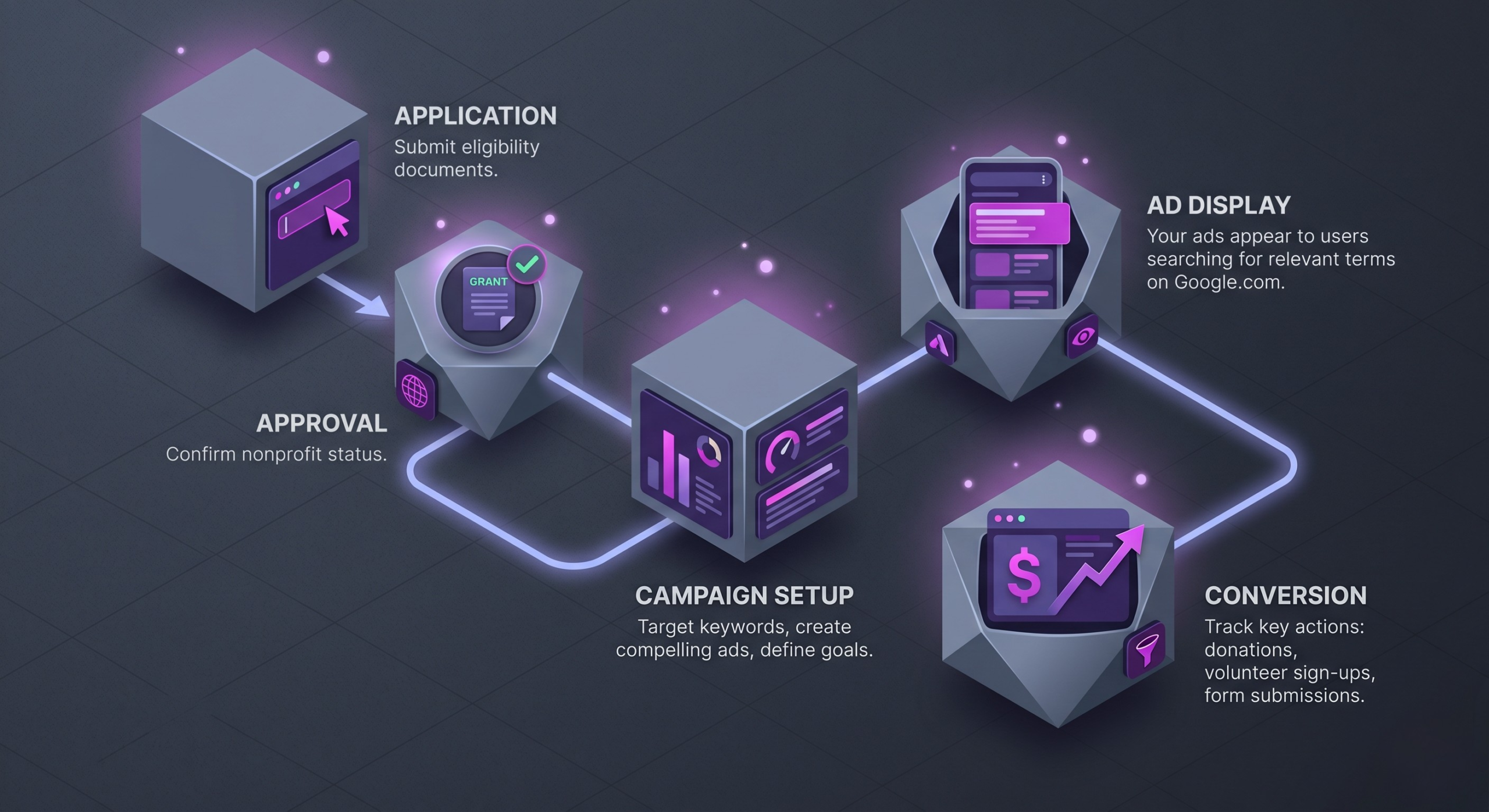
Eligible organizations apply through Google for Nonprofits and complete the Google Ad Grants approval process.
Approved nonprofits receive advertising credits that can be used on Google Search campaigns.
Organizations choose keywords connected to their mission, services, programs, or fundraising goals.
When someone searches relevant terms, Google may display the nonprofit's ads above organic search results.
Users are directed toward donation pages, volunteer pages, service pages, educational resources, or other mission-related destinations.
On paper, the system appears simple. In practice, performance depends heavily on campaign structure, keyword strategy, compliance management, landing page quality, conversion tracking, and ongoing optimization.
Most registered nonprofit organizations are eligible for Google Ad Grants if they meet Google's requirements.
Generally Eligible
Not Eligible
Eligibility requirements can change over time. Organizations should always review Google's official requirements directly.
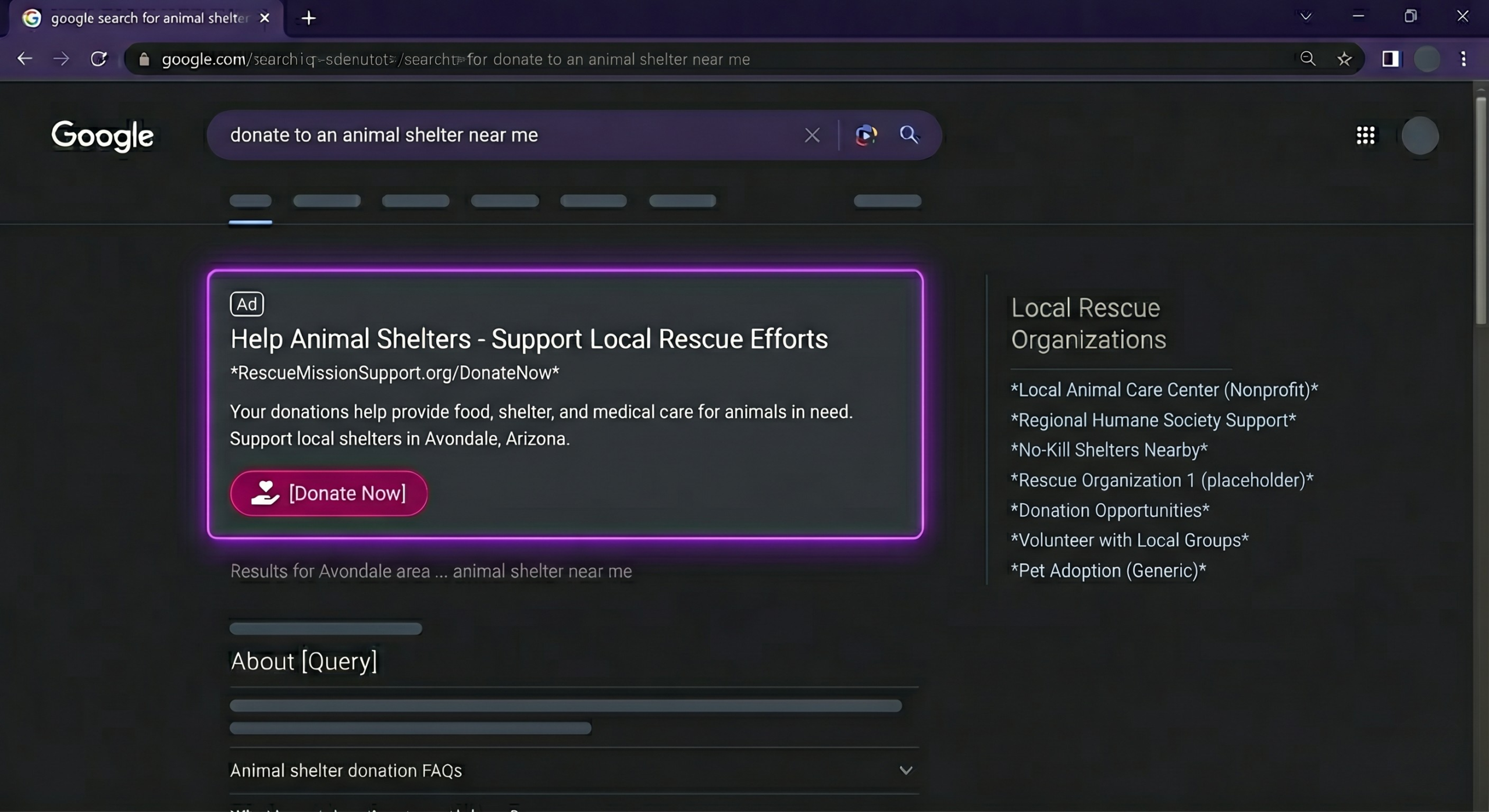
Google Ad Grants ads appear primarily on Google Search results pages. These ads are:
Unlike display advertising or social media campaigns, Google Ad Grants reaches users based on active search intent. That distinction matters enormously.
"domestic violence shelter near me"
…is already looking for help.
"nonprofit volunteer opportunities"
…is already looking for involvement.
This creates a fundamentally different type of traffic than interruption-based advertising.
This is the part most nonprofits do not expect.
Many organizations assume the grant will naturally produce traffic, donations, volunteers, or engagement once activated. What actually happens is more complex.
Most Google Ad Grant accounts struggle with:
The result is often the same: The account is technically active — but mission outcomes remain inconsistent. For many nonprofits, the issue is not access to the grant — it is the lack of ongoing optimization, compliance oversight, and conversion-focused management.
Ready to see what proper Google Ad Grant management looks like?
Explore Google Ad Grant Management Services →
Many nonprofit Google Ads campaigns prioritize clicks instead of meaningful actions such as donations, volunteer applications, service inquiries, event registrations, and program participation. Traffic alone does not create mission impact.
Google Ad Grants has ongoing compliance requirements that affect visibility and account stability. Small compliance issues can quietly reduce visibility over time. Many organizations do not realize performance has deteriorated until months later.
Learn how AdTik structures compliance into ongoing stewardship.
Explore the Impact Fellowship →Many nonprofits treat Google Ad Grants like a one-time setup project. Without ongoing optimization, most accounts slowly lose effectiveness over time.
The 60-Point Cause Amplifier Assessment helps identify structural issues, compliance gaps, and optimization opportunities in your account.
Explore the 60-Point Assessment →A properly managed Google Ad Grant should consistently help nonprofits:
The goal is not simply "more traffic." The goal is useful visibility that creates meaningful action.
Search behavior has changed significantly over the last several years. This makes Google Ad Grants one of the highest-intent nonprofit marketing channels available today.
But intent alone is not enough. Performance still depends on structure, optimization, tracking, and stewardship.
Stay current on Google Ad Grants strategy, performance trends, and nonprofit marketing insights.
Explore the AdTik Blog →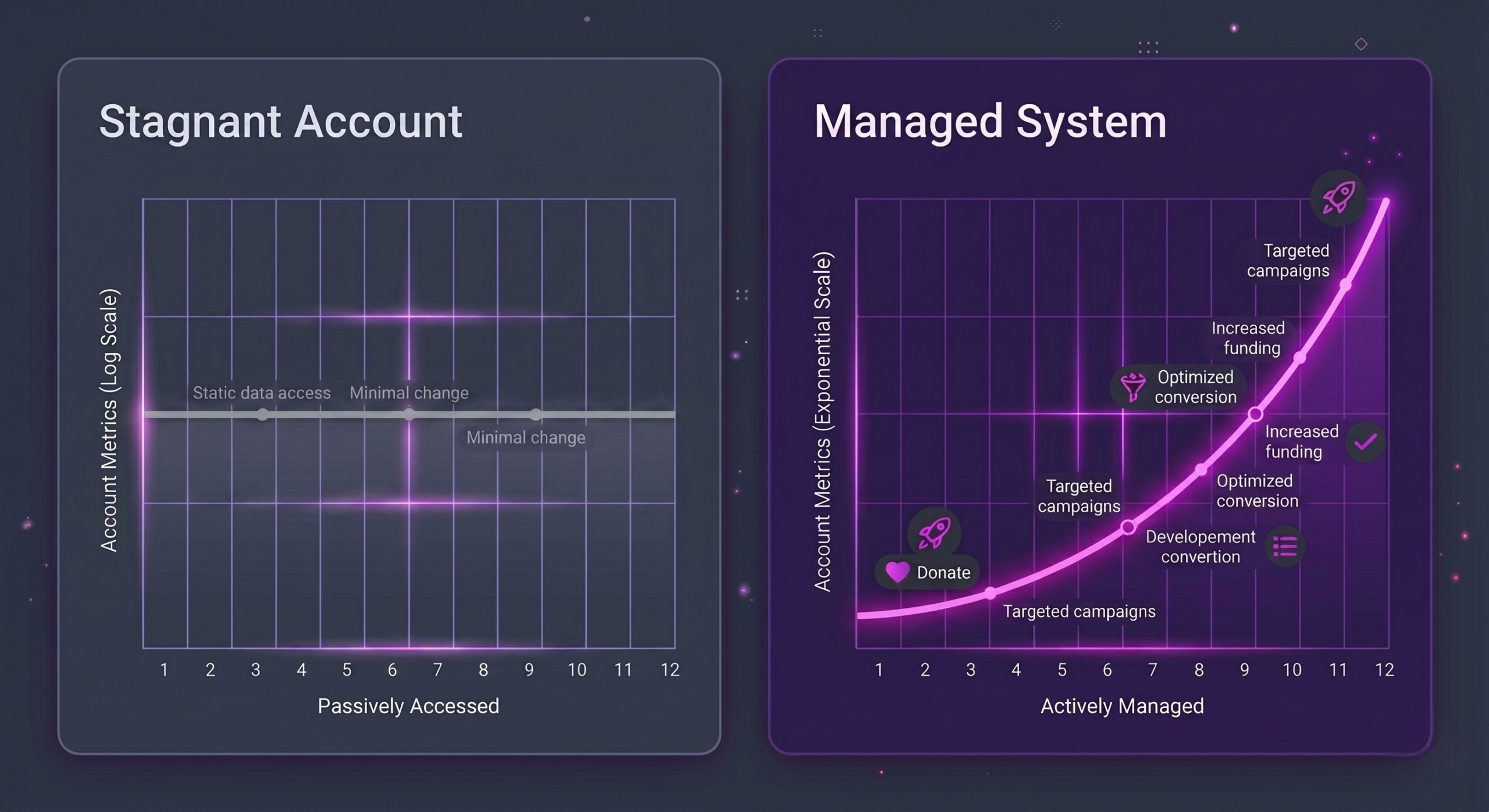
Most nonprofits fall into one of two categories:
They have access to Google Ad Grants but do not use it effectively.
They are actively using the grant but not seeing measurable outcomes.
In both cases, the issue is usually not access. It is system design, conversion strategy, and ongoing management.
AdTik provides ongoing Google Ad Grant management and Technical Stewardship for nonprofits. We help organizations improve:
Our role is not simply managing ads; it is building and maintaining the system behind nonprofit search performance.
Want to understand how this system is structured?
Explore the AdTik Homepage →
You've read how the system works. The question now is whether yours is built correctly. A short conversation is the fastest way to find out — and to determine whether there's a meaningful gap between where your grant is and where it should be.
Most nonprofits reach out when they are trying to answer questions like:
This conversation exists to help you understand where things currently stand and what the most sensible next step looks like.
No obligation. Just clarity.